
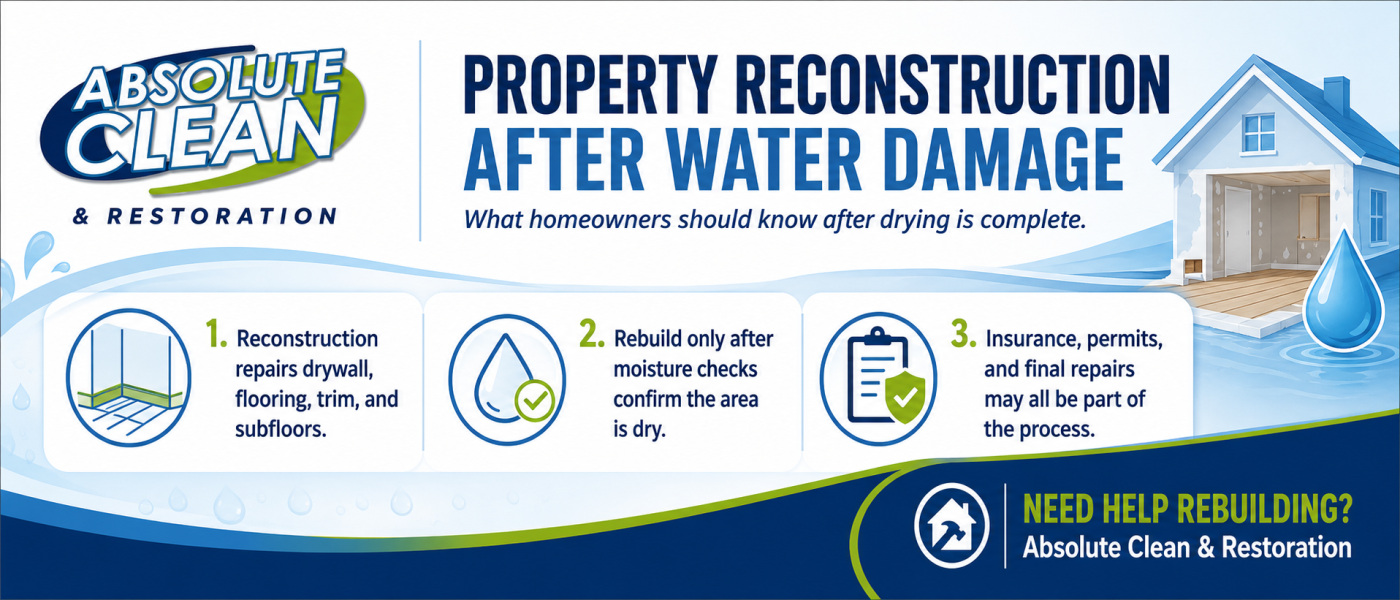
After the water is removed and the drying equipment is gone, your home may still be far from normal. Drywall may be cut open. Flooring may be missing. Trim, insulation, cabinets, or subfloors may need repair.
That is where property reconstruction comes in.
Water damage restoration stops the immediate damage. Reconstruction rebuilds the parts of the home that were removed, weakened, or damaged during the cleanup process.
Mitigation vs. Reconstruction
Mitigation is the emergency part of the job. It includes water extraction, moisture detection, structural drying, and removing materials that cannot be saved.
Reconstruction is the repair phase. It may include drywall replacement, framing repairs, subfloor work, flooring installation, trim replacement, painting, and other repairs needed to make the home usable again.
Both steps matter. A home can be dry but still not be safe, finished, or ready for everyday use.
When Reconstruction Is Needed
Reconstruction is often needed after water, mold, fire, or storm damage. The amount of work depends on how far the damage spread and what materials were affected.
Common signs that reconstruction may be necessary include:
- Cut or missing drywall
- Removed insulation
- Warped flooring
- Buckled subfloors
- Damaged trim or baseboards
- Soft or sagging materials
- Framing concerns
- Mold-damaged materials that had to be removed
Repairs should not begin until the affected areas are properly dried. If new materials are installed over hidden moisture, mold and odors can return.
Why a Restoration Contractor Matters
General contractors can handle many types of remodeling, but reconstruction after water damage is different. The contractor needs to understand moisture, drying standards, mold concerns, demolition, and insurance documentation.
A restoration-focused contractor can help move the project from cleanup to repairs without starting over with a separate company. That can reduce delays, improve communication, and help keep the repair process more organized.
It also helps when the same team understands what was removed, why it was removed, and what needs to be rebuilt.
The Reconstruction Process
A typical reconstruction project starts with a final moisture check. This confirms that the affected areas are dry enough for new materials.
From there, the process may include:
-
Damage review
The team checks what materials were removed or damaged and what repairs are needed. -
Estimate and documentation
A repair estimate is created for the work. If insurance is involved, photos and documentation may be needed. -
Removal of remaining damaged materials
Any unsafe, wet, mold-damaged, or unsalvageable materials are removed. -
Structural and interior repairs
Framing, subfloors, drywall, flooring, trim, cabinets, and paint may be repaired or replaced. -
Final cleanup and walkthrough
The work area is cleaned, and the finished repairs are reviewed with the homeowner.
The goal is to return the home to a clean, safe, finished condition.
Insurance and Reconstruction
If the damage was caused by a covered event, such as a sudden pipe break, your insurance may cover some or all of the reconstruction. Coverage depends on your policy and the cause of the loss.
A professional reconstruction contractor can provide repair estimates, photos, and documentation for the claim. If hidden damage is found after the first estimate, the contractor may need to submit additional documentation to the insurance company.
It is always a good idea to review your policy and speak with your adjuster about what is covered.
Permits and Code Requirements
Some reconstruction projects may require permits, especially when structural repairs, electrical work, plumbing, or larger remodeling is involved. Local requirements vary based on the type and size of the project.
Before rebuilding begins, it is important to confirm whether permits or code-related updates are needed. This helps avoid delays and makes sure the work is completed properly.
Get Help With Property Reconstruction
Water damage recovery does not end when the house is dry. If walls, floors, trim, or structural materials were removed, you still need the reconstruction phase to finish the job.
Absolute Clean & Restoration provides water damage restoration, mold remediation, structural drying, and property reconstruction services in Belleville and the surrounding Metro East area.
If your home has been dried out but still needs repairs, contact Absolute Clean & Restoration for a reconstruction estimate.
Frequently Asked Questions
What is the difference between mitigation and reconstruction?
Mitigation stops the damage from spreading. It includes water removal, drying, moisture checks, and removing damaged materials. Reconstruction is the repair phase that rebuilds the home after mitigation is complete.
How long does reconstruction take after water damage?
The timeline depends on the amount of damage, drying time, material availability, permits, and the size of the repair. Small drywall repairs may take a few days. Larger projects, such as basement reconstruction, can take longer.
Will insurance cover reconstruction after water damage?
Insurance may cover reconstruction if the water damage came from a covered event, such as a sudden pipe break. Coverage depends on your policy, the cause of the loss, and the documentation provided.
Do I need a permit for reconstruction?
Some projects require permits, especially if they involve structural work, electrical, plumbing, or major repairs. A contractor can help determine what is required before work begins.
Article by
Scott Ross