
A musty smell in your carpet is often a sign that moisture is still trapped underneath. The surface may look dry, but water can remain in the carpet backing, padding, subfloor, and nearby baseboards.
That is why carpet cleaning after a leak, flood, or basement moisture issue is different from routine cleaning. A standard steam clean may help with dirt and stains, but it is not designed to remove hidden water from the layers below the carpet.
If moisture is left behind, it can lead to odors, mold growth, damaged padding, and problems with the subfloor.
Why Moisture Gets Trapped Under Carpet
Carpet padding acts like a sponge. When water reaches it, the padding can hold moisture long after the carpet fibers feel dry.
This can happen after:
- A burst pipe
- Appliance leak
- Basement flood
- Overflowing toilet or sink
- Water heater leak
- Heavy humidity
- Foundation seepage
- Stormwater intrusion
In humid areas, drying can take even longer. If the padding and subfloor are not dried quickly, odors and mold concerns can develop within 24 to 48 hours.
Why Standard Steam Cleaning Is Not Enough
Steam cleaning is useful for regular maintenance. It can remove everyday soil, pet odor, and light staining. But after water damage, adding more moisture can make the problem worse if the deeper layers are already wet.
A rental machine or household cleaner usually does not have enough suction to remove water from the padding or subfloor. The carpet may look cleaner, but moisture can remain underneath.
That hidden moisture is often what causes musty smells to return.
Signs Your Carpet Has Hidden Moisture
You may need restoration-grade carpet cleaning or water extraction if you notice:
- A musty or mildew smell
- Damp spots that will not dry
- Stains that come back after cleaning
- Buckling or rippling carpet
- Soft or spongy padding
- Water stains near baseboards
- Peeling paint or swollen trim
- Increased allergy or breathing irritation indoors
If the smell gets worse after the room is closed up or the air conditioning runs, moisture or contamination may still be present.
What Restoration-Grade Carpet Cleaning Includes
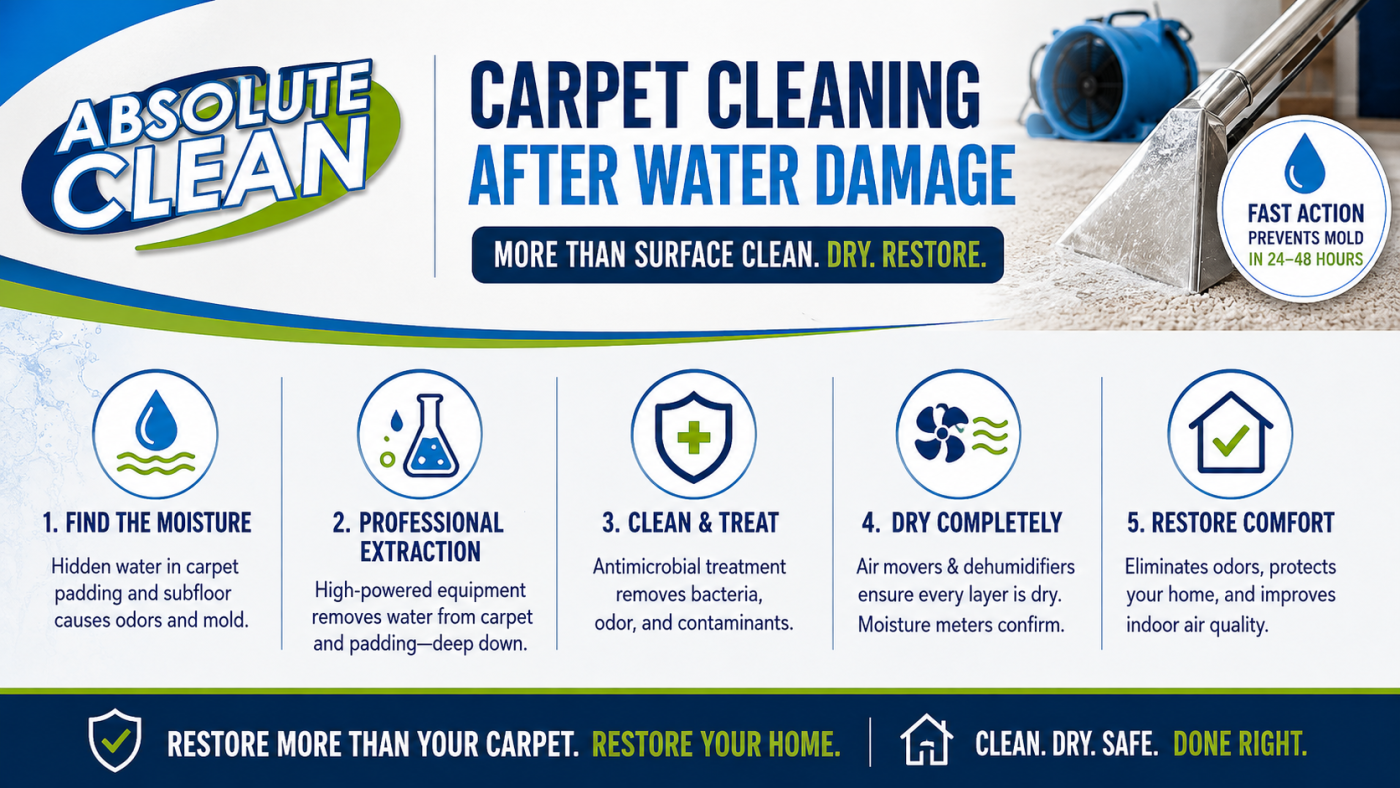
Restoration-grade cleaning is designed to remove water and contaminants from deeper layers, not just the surface.
The process may include:
-
Moisture inspection
Technicians check the carpet, padding, subfloor, walls, and baseboards to find hidden water. -
Water extraction
High-powered extraction equipment removes water from the carpet and padding when the materials can be saved. -
Antimicrobial treatment
Treatment may be applied to help address bacteria, odor, and mold concerns. -
Drying equipment
Air movers and dehumidifiers help dry the carpet, padding, and surrounding structure. -
Moisture monitoring
The area is checked until it reaches safe drying levels.
The goal is to make sure the flooring system is actually dry, not just better looking.
When Carpet Can Be Saved
Carpet may be restorable when the water came from a clean source, the response is fast, and the materials have not stayed wet too long.
Cleaning and drying may work if:
- The water came from a clean supply line or appliance leak
- The carpet was wet for less than 24 to 48 hours
- There is no sewage or outside floodwater involved
- The carpet and padding are still in good condition
- The subfloor is not damaged
- Odors are mild and treatable
In these cases, professional extraction and drying can often save the carpet and reduce replacement costs.
When Carpet Should Be Replaced
Not all carpet should be saved.
Replacement is often the safer choice if the water came from sewage, groundwater, storm flooding, or any contaminated source. Carpet padding is especially difficult to sanitize after this type of exposure.
Carpet may also need to be removed if it has been wet for several days, smells strongly of mildew, shows visible mold, or has damaged padding and subflooring underneath.
A professional inspection can help determine whether cleaning or replacement makes more sense.
Why Fast Drying Matters
Time matters after water reaches carpet. The longer moisture sits, the more likely it is to move into the subfloor, trim, walls, and nearby furniture.
Fast extraction and controlled drying can help prevent:
- Mold growth
- Musty odors
- Warped subfloors
- Damaged carpet padding
- Stained baseboards
- Poor indoor air quality
- More expensive repairs
If your carpet is wet from a leak or flood, it is better to have it checked quickly instead of waiting to see if the smell goes away.
Get Help With Carpet Cleaning After Water Damage
If your carpet smells musty, feels damp, or was affected by a leak, it may need more than routine cleaning. Hidden moisture under the carpet can continue to cause problems even after the surface looks dry.
Absolute Clean & Restoration provides carpet cleaning, water extraction, structural drying, odor removal, and mold remediation for homeowners in Belleville and the surrounding Metro East area.
If you are unsure whether your carpet can be cleaned or should be replaced, contact Absolute Clean & Restoration for a professional moisture assessment.
Frequently Asked Questions
How long does carpet take to dry after restoration cleaning?
Most carpets dry within several hours when professional extraction, air movers, and dehumidifiers are used. Drying time depends on the amount of moisture, the padding, the subfloor, and indoor humidity.
Can professional carpet cleaning remove musty odors?
Yes, if the odor source is in the carpet and can be reached. Professional extraction, drying, and antimicrobial treatment can help remove moisture, bacteria, and odor-causing contaminants.
Should carpet be cleaned or replaced after a water leak?
It depends on the water source and how long the carpet was wet. Clean water damage may be restorable if handled quickly. Carpet affected by sewage, floodwater, or long-term moisture usually needs replacement.
What is the difference between steam cleaning and water extraction?
Steam cleaning is mainly for surface cleaning and routine maintenance. Water extraction is part of the restoration process and uses stronger suction to remove moisture from the carpet, padding, and deeper layers.
Article by
Scott Ross