Water in a basement can come from several sources, and it often goes unnoticed until it has soaked into flooring, drywall, and stored belongings. Absolute Clean & Restoration provides basement water damage cleanup for homes and businesses in Belleville and nearby Metro East communities as part of our water damage restoration services, from water removal and drying to cleanup and repairs.
Common Causes of Basement Flooding
 Basements are the lowest point of a building, so water tends to collect there. Common causes include:
- Heavy rain or snowmelt seeping in through foundation walls, floors, or window wells
- Sump pump failures, including power outages during storms
- Burst or leaking pipes, especially in unheated or exposed areas
- Water heater, washing machine, or other appliance leaks
- Floor drain or sewer backups
We clean up and restore the water-damaged areas. If the cause is a failed sump pump, a plumbing leak, or a foundation or drainage problem, a plumber or waterproofing contractor will typically need to correct it so the problem does not return.
What to Do When You Find Water in Your Basement
- Do not step into standing water if outlets, cords, appliances, or the electrical panel may be in contact with it. If you cannot safely reach the breaker, contact your utility company or an electrician.
- If the water is coming from a pipe or appliance and the shut-off valve is safe to reach, turn off the water supply.
- Move dry belongings up and away from the water if you can do so safely.
- Photograph the water, the damage, and affected belongings before cleanup starts.
- Do not use a household vacuum to remove water. Contact us to schedule water removal and drying.
Is the Water Clean or Contaminated?
Water from a supply line or water heater starts out relatively clean, but floodwater that enters from outside can carry dirt, bacteria, and other contaminants. It is safest to treat floodwater as potentially contaminated, avoid direct contact with it, and keep children and pets out of the area. If the water came up through a floor drain or toilet, it may be sewage, which calls for extra precautions and usually the removal of affected materials. Our sewage backup cleanup page explains what that process involves.
Basement Water Removal and Drying
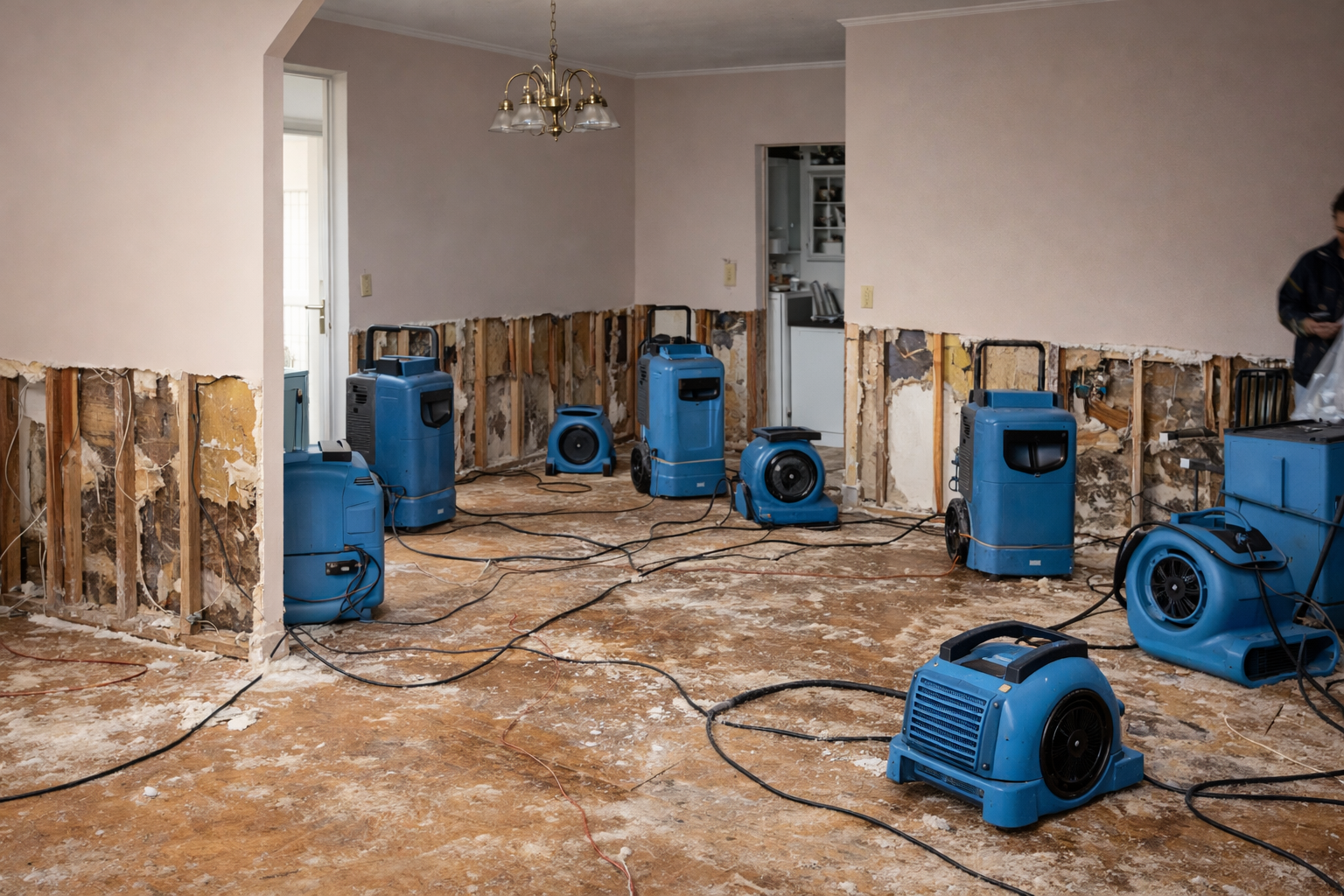
We start by removing standing water with pumps and extraction equipment. We then use moisture meters and infrared technology to find water that has soaked into flooring, the lower part of drywall, and framing, since these areas can stay wet after the surface looks dry. Air movers and dehumidifiers dry the space, and moisture levels are checked as drying progresses. Affected areas are cleaned, sanitized, and deodorized, and the work is documented.
Finished and Unfinished Basements
In an unfinished basement, cleanup usually centers on extracting the water, drying concrete floors and walls, and cleaning affected surfaces. Finished basements contain more materials that hold moisture, such as carpet and padding, drywall, insulation, baseboards, and trim. Some of these can be dried in place, while others may need to be removed so the structure behind them can dry. We will explain what can be saved and what needs to be removed.
Mold Risk After Basement Water Damage
Basements are often cool, humid, and poorly ventilated, which makes it easier for mold to develop on materials that stay wet. Mold can begin growing on damp materials within 24 to 48 hours, so thorough drying is the most important step in reducing the risk. If mold has already appeared, our mold remediation services can address it.
Basement Repairs After Cleanup
Once the basement is dry, removed drywall, flooring, and trim can be replaced through our reconstruction services.
Insurance
We work with your insurance provider and document the damage and the work completed. Coverage for basement water damage varies widely. Policies often treat a burst pipe, a sump pump failure, and outside flooding differently, so check with your insurance company about your specific policy.



 Owner – Scott Ross