When a frozen pipe bursts, it can release a large amount of water in a short time, often inside a wall, ceiling, or crawl space where it is not immediately visible. Absolute Clean & Restoration provides water damage cleanup and restoration after frozen and burst pipes for homes and businesses in Belleville and the surrounding Metro East. Our work begins once the water is stopped: we remove the water, dry the affected building materials, and restore the damaged areas.
How Freezing Temperatures Damage Pipes
 When water freezes inside a pipe, it expands and builds pressure in the line. That pressure can split the pipe or loosen a fitting. Pipes in exterior walls, attics, crawl spaces, garages, and unheated areas are the most exposed. Many leaks do not show up until the ice thaws and water starts flowing again, so burst pipe damage is often discovered some time after the pipe fails.
What to Do If a Pipe Bursts
- Shut off the main water valve if you can safely reach it. Knowing where the valve is before winter can save valuable time.
- Stay clear of water near outlets, light fixtures, and the electrical panel, and do not turn on ceiling lights if water is coming through the ceiling. Only shut off power at the breaker if you can do so without standing in water.
- Contact a plumber to repair the broken pipe. The leak needs to be fixed before the water supply is turned back on.
- Take photos of the pipe and the resulting damage for your insurance claim.
- Call us to start water removal and drying as soon as the water is shut off.
Where the Water Goes
Water from a burst pipe rarely stays in one place. It runs through wall cavities, soaks into insulation and the bottom of drywall, spreads under flooring, and drips through ceilings to the floor below. Wet insulation and subflooring can hold moisture for a long time without visible signs on the surface, which is why finding every affected area matters as much as removing the visible water.
Burst Pipe Water Damage Cleanup and Drying
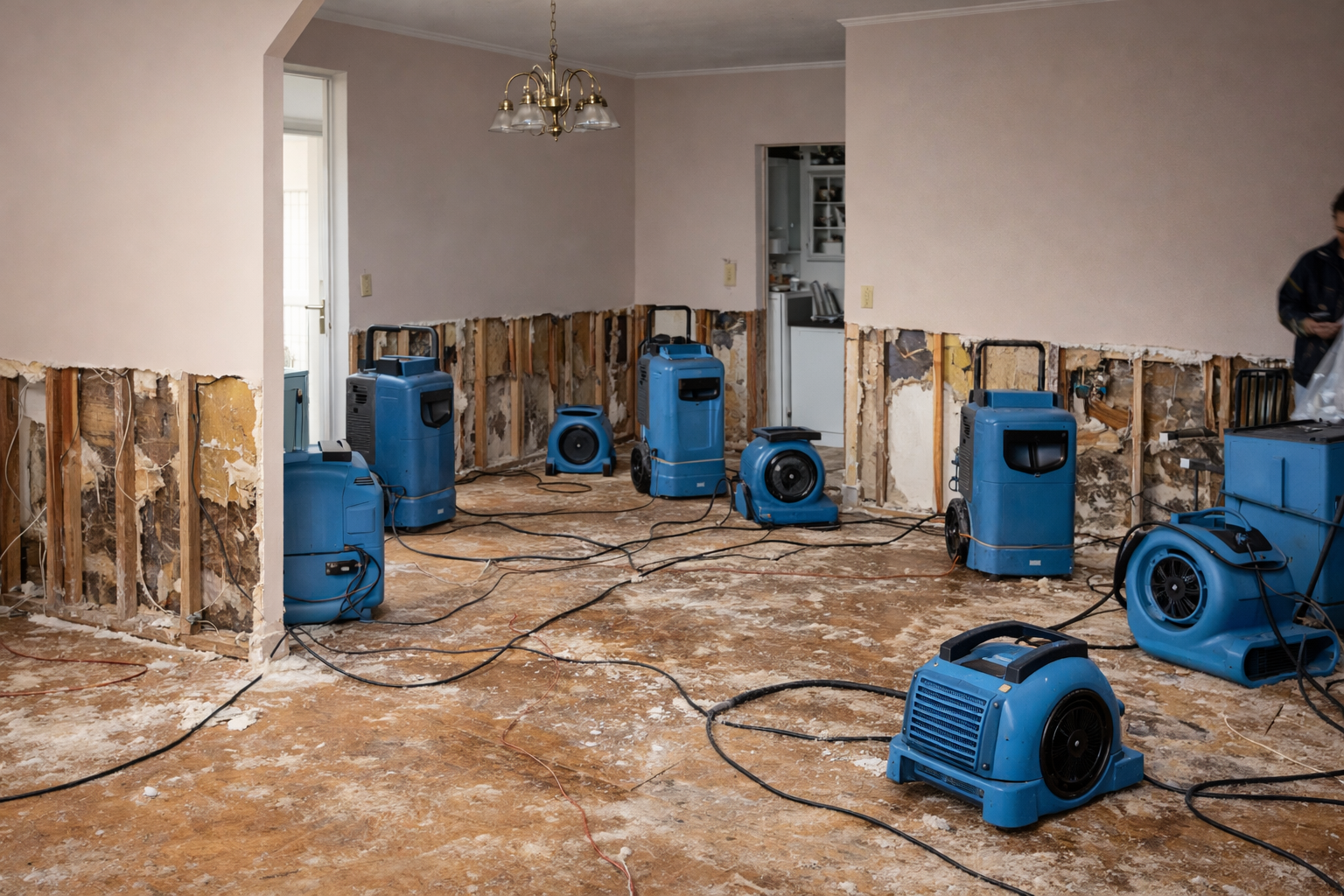
We remove standing water with extraction equipment, then use moisture meters and infrared technology to trace how far the water has traveled. Materials that can be dried in place are dried with air movers and dehumidifiers. Materials that cannot be dried effectively, such as saturated insulation or badly damaged drywall, may need to be removed so the cavity behind them can dry. The affected areas are then cleaned, sanitized, and deodorized.
Repairs and Reconstruction
After drying, any areas opened up or damaged during cleanup will need to be put back together. Our reconstruction services cover repairs such as drywall, flooring, and painting. If materials stayed wet long enough for mold to develop, we also provide mold remediation.
Insurance Considerations
We work directly with your insurance provider and document the damage and the drying process. Many homeowners policies treat a sudden pipe burst differently from a slow, long-term leak, and some include conditions about keeping a property heated during cold weather. Coverage depends on your policy, so contact your insurance company to confirm what is covered.



 Owner – Scott Ross