
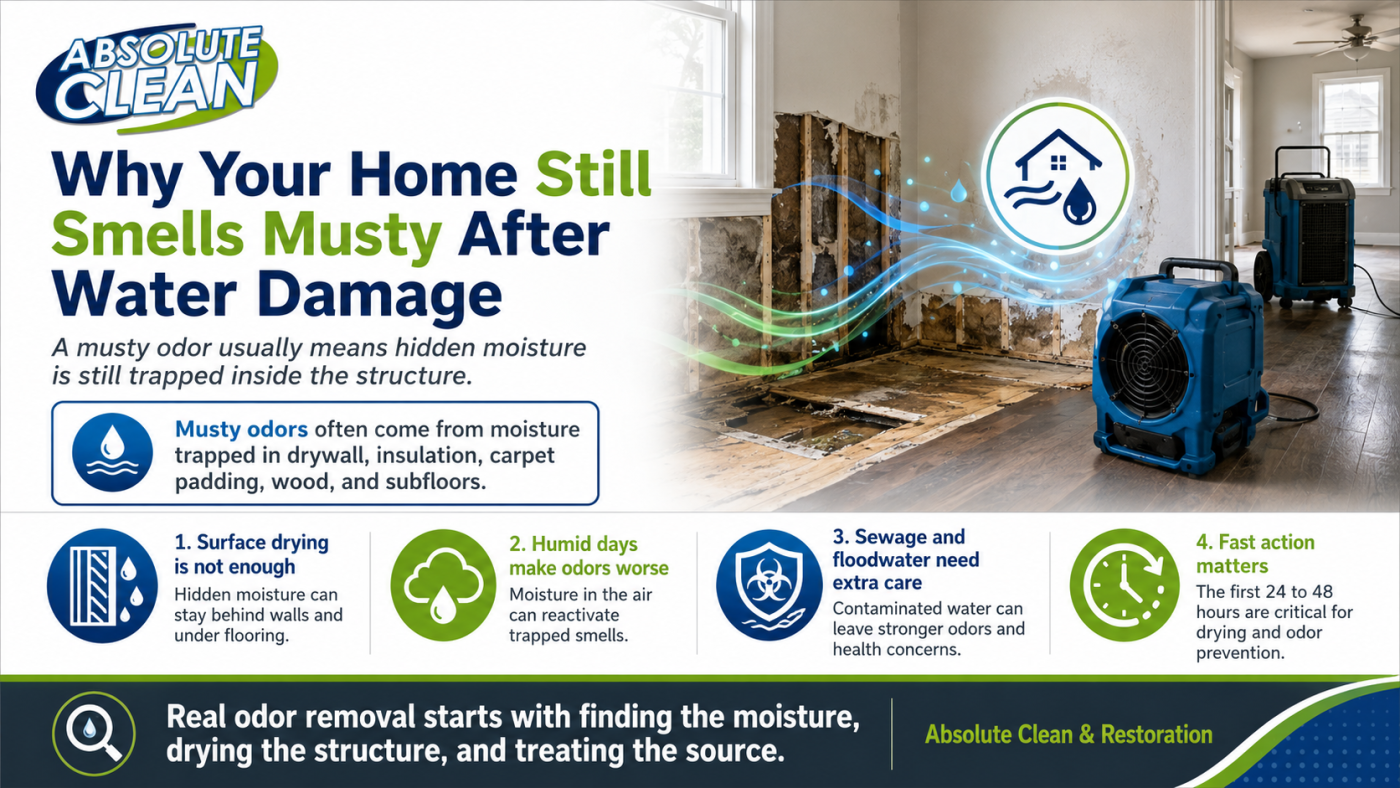
Why Your Home Still Smells Musty After Water Damage
Why does your home still smell damp even after the water is gone?
It’s a common problem after a leak, flood, sewage backup, or basement water issue. You mop up the visible water, run a few fans, maybe light a candle, and the house still has that stale basement smell. That usually means the problem is deeper than the surface.
Musty odors after water damage often come from moisture trapped inside materials like drywall, insulation, carpet padding, baseboards, subfloors, and wood framing. These materials can hold water even when the outside looks dry. Once moisture sits long enough, bacteria and mold can begin to grow and release odors into the air.
That is why real odor removal after water damage is not about covering up the smell. It is about finding the moisture, drying the structure, and treating the source.
Why Water Damage Odors Come Back
Most water damage odors come from damp porous materials. Drywall, wood, carpet, padding, and insulation can absorb water and hold odor-producing particles long after the floor looks clean.
This is especially common in basements, wall cavities, and rooms where water reached baseboards or flooring. You may notice the smell gets stronger on humid days because moisture in the air can reactivate odors trapped in building materials.
A musty smell can also point to hidden mold growth. That does not mean you should panic, but it does mean the area should be inspected. If the odor keeps returning, there is a good chance moisture is still present somewhere you cannot see.
Clean Water, Flood Water, and Sewage Odors
Not all water damage smells the same.
Clean water from a supply line or appliance leak may not smell bad at first. But if it sits too long, it can soak into materials and create odor problems. Water from a sewage backup or outside flooding is more serious because it can contain bacteria, waste, and contaminants.
If you see dark staining, tide marks on baseboards, bubbling paint, swollen trim, or damp carpet, the water may have reached deeper materials. That is where odors often settle in and become harder to remove.
Why Cleaning the Surface Is Not Enough
Household cleaners, sprays, candles, and plug-ins can make a room smell better for a short time. They do not remove moisture from wall studs, subfloors, carpet padding, or insulation.
This is why odors sometimes disappear for a day or two and then come back. The surface dries, but hidden moisture remains. As that moisture moves back toward the surface, it can bring stains and smells with it. This is sometimes called the wicking effect.
A regular fan usually cannot solve that problem. Structural drying requires stronger airflow, dehumidification, and moisture monitoring.
How Professionals Remove Water Damage Odors
Professional odor removal starts with finding the source. If a leak is still active or materials are still wet, odor treatment will not last.
The process usually includes:
-
Moisture inspection
Technicians check walls, floors, trim, cabinets, and hidden areas to find trapped water. -
Water extraction and drying
Standing water is removed, then air movers and dehumidifiers are used to dry the structure. -
Removal of damaged materials when needed
Carpet padding, wet insulation, or damaged drywall may need to be removed if it cannot be properly dried or cleaned. -
Cleaning and sanitizing
Antimicrobial treatments may be used to address bacteria, mold concerns, and odor sources. -
Odor neutralization
Equipment such as HEPA air scrubbers or hydroxyl generators may be used to improve air quality and help neutralize lingering odors.
The goal is not to perfume the room. The goal is to remove the conditions that caused the smell in the first place.
Why Fast Response Matters
The first 24 to 48 hours after water damage are important. The longer materials stay wet, the more likely you are to deal with odors, mold concerns, and damage to flooring, walls, and trim.
Fast water extraction and drying can help prevent odors from settling into the structure. It can also reduce the amount of demolition needed later.
If you have standing water, a sewage backup, a flooded basement, or a smell that will not go away, it is better to have the area checked sooner rather than waiting to see if it improves.
Protecting Indoor Air Quality and Home Value
A lingering musty smell is more than an inconvenience. It can affect how comfortable your home feels and may raise concerns during a home inspection or insurance claim.
Professional documentation can also be helpful if the damage is part of an insurance-related water loss. It shows what was inspected, what was dried, what was removed, and what steps were taken to restore the property.
More importantly, proper drying and odor removal help you feel confident that your home is not just dry on the surface, but properly restored.
Get Help With Water Damage Odors
You do not have to keep guessing where the smell is coming from. If your home still smells musty after water damage, there may be moisture trapped behind walls, under flooring, or inside other porous materials.
Absolute Clean & Restoration helps homeowners with water extraction, structural drying, sanitization, mold remediation, and odor removal after water damage. Our team serves Belleville and the surrounding Metro East area with emergency response when water damage cannot wait.
If the smell keeps coming back, contact Absolute Clean & Restoration for a professional odor assessment and water damage restoration help.
Frequently Asked Questions
Why does my house smell musty after water damage?
A musty smell usually means moisture is still trapped in porous materials such as drywall, wood, carpet padding, insulation, or subflooring. Even if the surface feels dry, hidden moisture can continue to cause odors.
Can I remove water damage odors myself?
You may be able to clean light surface odors, but persistent smells usually require professional drying and sanitizing. If the odor comes from inside walls, flooring, or carpet padding, sprays and household fans will not solve the source.
How long does professional odor removal take?
Most water damage odor removal projects take a few days, depending on the amount of moisture, the materials affected, and whether damaged materials need to be removed. Drying time is monitored to make sure the structure is actually dry.
Is a musty smell after water damage dangerous?
A musty smell can be a sign of microbial growth or poor indoor air quality. Some people may experience headaches, allergies, or breathing irritation around damp materials. It is best to have the area inspected if the smell does not go away.
Should I use an ozone machine for water damage odor?
Ozone machines should not be used without proper training. They can be harmful if used incorrectly, and they do not remove trapped moisture. If the source of the odor is still wet, the smell is likely to return.
Article by
Scott Ross