
A musty smell in your sofa or chair is not something to ignore. If your furniture was exposed to water from a leak, flood, or damp basement, moisture may still be trapped deep inside the fabric, foam, or frame.
That does not always mean the furniture is ruined. In many cases, professional upholstery cleaning can help remove moisture, odors, and contaminants before the damage becomes permanent.
The key is acting quickly and knowing when a piece can be restored safely.
Why Upholstery Needs More Than Surface Cleaning
Regular upholstery cleaning removes dirt, pet hair, stains, and everyday buildup. Water damage restoration is different.
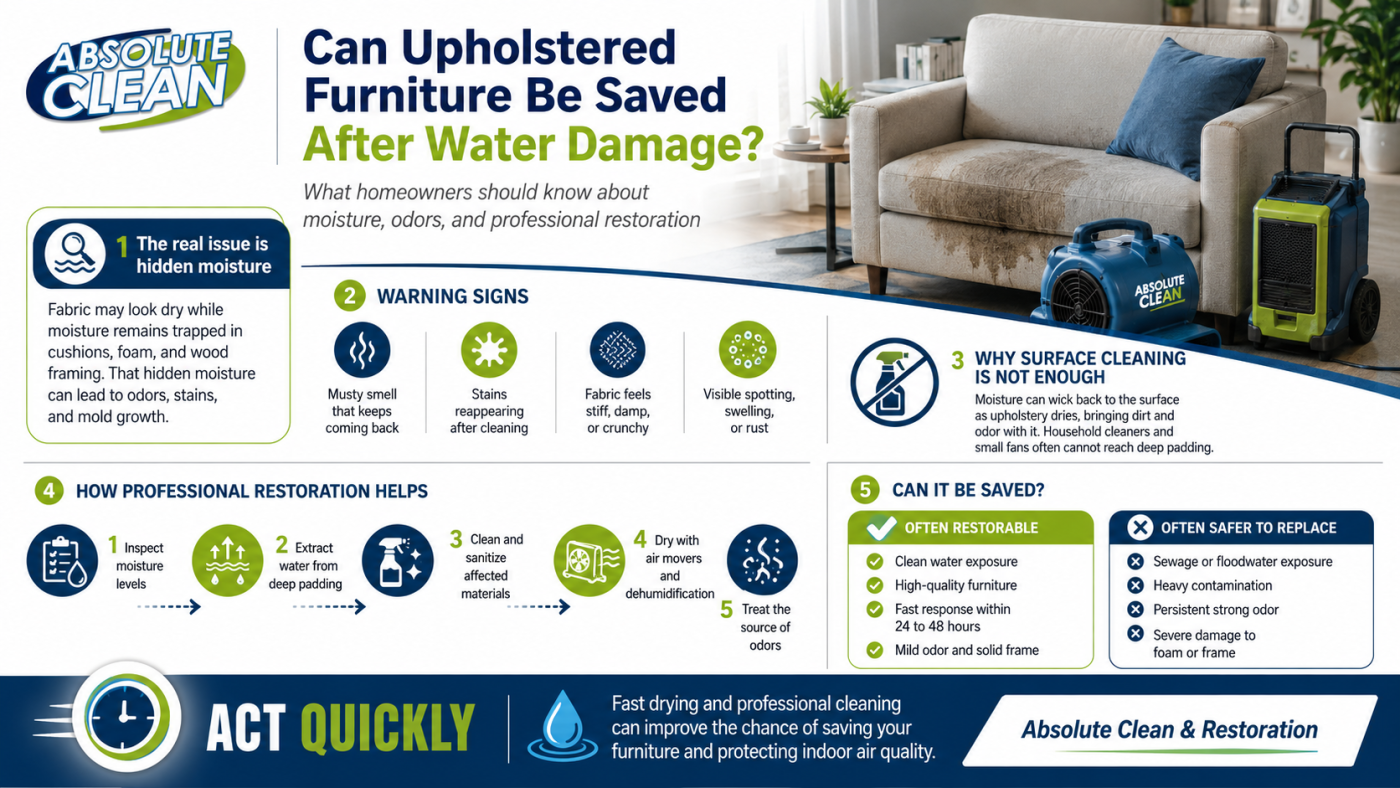
When furniture gets wet, moisture can soak into the padding, cushions, frame, and fabric backing. Even if the outside feels dry, the inside may still be damp. That trapped moisture can lead to odor, staining, mold growth, and damage to the structure of the furniture.
In humid conditions, mold can begin growing within 24 to 48 hours. That is why fast drying and proper cleaning matter.
Signs Your Furniture Has Hidden Moisture
Water-damaged furniture does not always look soaked. Sometimes the signs are subtle.
Watch for:
- A musty or sour smell
- Stains that keep coming back
- Fabric that feels stiff or crunchy
- Damp cushions or padding
- Swollen wood framing
- Rust on internal springs or metal parts
- Visible mold or spotting
If the odor keeps returning after the room is dry, there may still be moisture inside the furniture.
Why Stains and Odors Come Back
One common issue after water damage is called wicking. This happens when moisture inside the cushion or padding moves back up to the surface as the fabric dries.
That movement can bring dirt, bacteria, and odor with it. You may clean a stain, think it is gone, then see it return a few days later.
Household cleaners and small fans usually cannot reach deep enough to stop this. Professional extraction and drying equipment are needed when the padding or frame has absorbed moisture.
How Professional Upholstery Restoration Works
A professional cleaning process starts with an inspection. The technician checks the fabric type, water source, moisture level, and how deeply the furniture was affected.
The process may include:
- Moisture inspection
Moisture meters help determine whether the fabric, padding, or frame is still wet. - Water extraction
Industrial equipment removes moisture from deep inside the upholstery. - Cleaning and sanitizing
Antimicrobial treatments may be used to address bacteria, odor, and mold concerns. - Controlled drying
Air movers and dehumidifiers help dry the furniture safely and evenly. - Odor treatment
Odor removal focuses on the source, not covering the smell with fragrance.
The goal is to restore the piece without leaving moisture behind.
Can All Furniture Be Saved?
Not always. Whether furniture can be restored depends mostly on the type of water involved.
Furniture affected by clean water from a supply line, appliance leak, or bathtub overflow may often be cleaned and dried if the response is fast.
Furniture exposed to sewage, groundwater, or floodwater is more serious. Because foam and fabric are porous, they can absorb contaminants that are difficult or unsafe to remove completely. In those cases, replacement may be the safer option.
When Restoration Makes Sense
Professional upholstery cleaning is often worth considering when:
- The furniture is high quality
- The water came from a clean source
- The piece has been wet for less than 24 to 48 hours
- The odor is mild
- There is no sewage or floodwater contamination
- The frame is still solid
A well-built sofa, sectional, or chair can be expensive to replace. If it can be safely dried and cleaned, restoration may save money and help protect your home’s indoor air quality.
What to Do Before Help Arrives
If your furniture gets wet, take action right away.
Blot excess moisture with clean white towels. Do not rub the fabric. If the floor is wet, raise the furniture on blocks or another safe surface. Keep air moving with fans if possible, but avoid adding more water, soap, or cleaning products.
If the furniture was exposed to sewage or outside floodwater, avoid handling it until a professional can inspect it.
Get Help With Upholstery Cleaning After Water Damage
Musty furniture is often a sign that water damage is not fully resolved. Moisture can stay hidden in cushions, foam, fabric, and wood framing long after the surface appears dry.
Absolute Clean & Restoration provides upholstery cleaning, water damage restoration, odor removal, mold remediation, and structural drying for homeowners in Belleville and the surrounding Metro East area.
If you are unsure whether your furniture can be saved, contact Absolute Clean & Restoration for a professional inspection.
Frequently Asked Questions
Can mold be removed from upholstered furniture?
Sometimes. If the mold is caught early and the water source was clean, professional cleaning and antimicrobial treatment may help restore the piece. If the furniture was exposed to sewage or floodwater, replacement is often safer.
How long does furniture take to dry after professional cleaning?
Most furniture dries within several hours, but drying time depends on the fabric, padding thickness, humidity, and how wet the piece was. Moisture meters are used to confirm that the inside is dry.
Is it worth cleaning furniture from a flooded basement?
It depends on the water source. Clean water damage may be restorable. If the basement flooding involved groundwater or sewage, soft furniture is often unsafe to keep because contaminants can soak into the padding.
Will professional cleaning remove musty odors?
Yes, if the odor source can be reached and treated. Professional cleaning removes moisture, bacteria, and odor-causing contaminants instead of masking the smell with perfume.

Article by
Scott Ross