
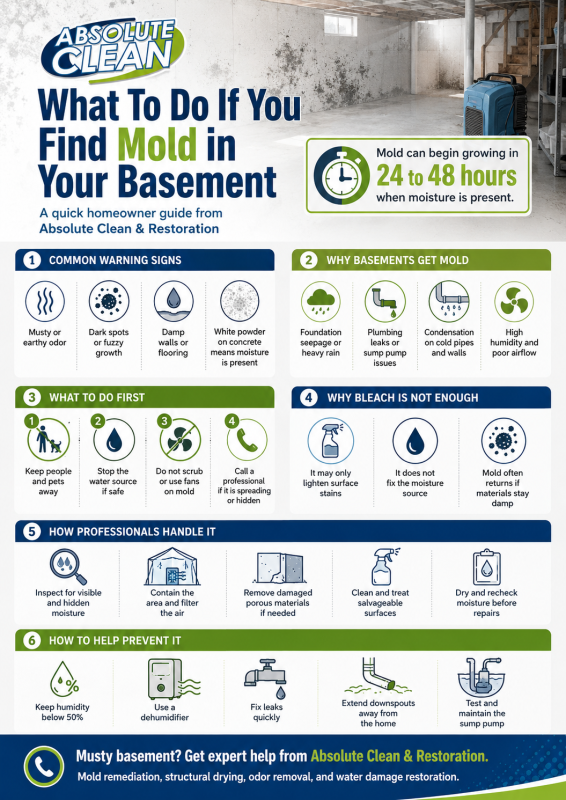
A musty smell in your basement is not always just “old house smell.” It can be a sign of trapped moisture, hidden leaks, or mold growth behind walls, under flooring, or along the foundation.
Basement mold is common because lower levels are naturally more vulnerable to moisture. Water can enter through foundation cracks, sump pump failures, plumbing leaks, condensation, or humidity. Once moisture is present, mold can begin growing on drywall, wood, insulation, carpet, and other porous materials.
The sooner you find the source, the easier it is to stop the damage from spreading.
How to Tell If You Have Basement Mold
Mold is not always obvious. Sometimes you will see dark spots on drywall, fuzzy growth on wood, staining near the baseboards, or discoloration on stored items. Other times, the first warning sign is a smell.
Watch for:
- A musty or earthy odor
- Dark spots on walls, trim, or floor joists
- Fuzzy green, black, or white growth
- Peeling paint or bubbling drywall
- Damp carpet or flooring
- Water stains near the floor
- White powdery buildup on concrete walls
That white powdery buildup is often efflorescence. It is not mold, but it does mean moisture is moving through the concrete. If the moisture problem is not corrected, mold can follow.
Why Basements Develop Mold
Mold needs moisture, air, and an organic material to grow. Basements often provide all three.
Moisture can come from heavy rain, poor drainage, foundation seepage, sump pump issues, plumbing leaks, or condensation on cold pipes and walls. Finished basements are especially vulnerable because moisture can get trapped behind drywall, under flooring, or inside insulation.
In humid weather, basement air can feel damp even without standing water. If the humidity stays high, mold can grow on wood, paper-faced drywall, carpet, boxes, and furniture.
What to Do First
If you suspect mold, avoid disturbing the area. Scrubbing dry mold can send spores into the air. Do not point fans at moldy materials, and turn off the HVAC system if you think mold may be near ductwork or air returns.
Start with these steps:
- Keep people and pets away from the affected area.
- Stop the water source if it is safe to do so.
- Avoid touching or cleaning visible mold.
- Do not use fans on moldy surfaces.
- Call a professional if the area is large, spreading, or connected to water damage.
Small surface spots may be simple to address, but hidden moisture behind finished walls is a different problem. That usually requires inspection and professional drying.
Why Bleach Is Not a Reliable Fix
Bleach may lighten surface stains, but it does not solve the moisture problem. On porous materials like drywall and wood, the water in bleach can soak in and leave moisture behind.
That means the mold may appear to fade at first, then return later. Real mold cleanup focuses on removing contaminated materials when needed, cleaning salvageable surfaces, drying the structure, and correcting the moisture source.
If the leak, humidity, or foundation issue remains, the mold will likely come back.
How Our Professionals Handle Basement Mold
Professional mold remediation starts with finding the moisture source. Without that step, cleanup is only temporary.
The process may include:
- Inspecting the basement for visible and hidden moisture
- Using moisture meters or thermal imaging to locate damp areas
- Containing the work area to limit spore spread
- Using HEPA filtration or air scrubbers
- Removing damaged porous materials when needed
- Cleaning non-porous surfaces
- Applying antimicrobial treatment where appropriate
- Drying the structure
- Rechecking moisture levels before repairs begin
The goal is not just to remove what you can see. The goal is to stop the conditions that allowed mold to grow.
When Materials Need to Be Removed
Some materials can be cleaned. Others cannot.
Concrete, metal, and some hard surfaces may often be cleaned and treated. Porous materials like wet drywall, insulation, carpet padding, and heavily contaminated stored items may need to be removed.
If the basement was affected by sewage, groundwater, or floodwater, the cleanup becomes more serious. Contaminated water can carry bacteria and other health risks, so soft materials are often not safe to keep.
How to Help Prevent Basement Mold
After cleanup, prevention matters. Basement mold often returns when moisture control is ignored.
To lower the risk:
- Keep basement humidity below 50 percent when possible
- Use a dehumidifier during humid months
- Keep gutters clean
- Extend downspouts away from the foundation
- Fix plumbing leaks quickly
- Check sump pumps regularly
- Use a battery backup if flooding is a concern
- Avoid storing cardboard directly on basement floors
- Improve air movement in damp areas
Basement mold prevention is really moisture prevention. If the space stays dry, mold has a much harder time growing.
Get Help With Basement Mold
If your basement smells musty or you see signs of mold, do not wait for it to spread. Moisture can move behind walls, under flooring, and into stored belongings before the damage is obvious.
Absolute Clean & Restoration helps homeowners with mold remediation, water damage restoration, odor removal, structural drying, and basement moisture problems in Belleville and the surrounding Metro East area.
If you are unsure how serious the issue is, contact Absolute Clean & Restoration for a professional basement mold inspection.
Frequently Asked Questions
How fast can mold grow in a basement?
Mold can begin growing within 24 to 48 hours when moisture is present. The exact timing depends on humidity, temperature, airflow, and the materials affected.
Can I stay in my home during basement mold remediation?
In many cases, yes. Professionals can set up containment and air filtration to separate the basement work area from the rest of the home. The answer depends on the size of the affected area and the condition of the indoor air.
Is black mold worse than other mold?
Color alone does not tell you how dangerous mold is. Black, green, white, and gray mold can all be a problem indoors. Any mold growth should be taken seriously and handled safely.
What is the difference between mold inspection and mold testing?
A mold inspection looks for moisture sources, visible growth, and affected materials. Mold testing may involve air or surface samples sent to a lab. In many cases, finding and fixing the moisture source is the most important step.
How do I keep mold from coming back?
Keep the basement dry. Control humidity, fix leaks quickly, maintain gutters and downspouts, check your sump pump, and remove wet materials before mold has time to grow.

Article by
Scott Ross